
Introduction
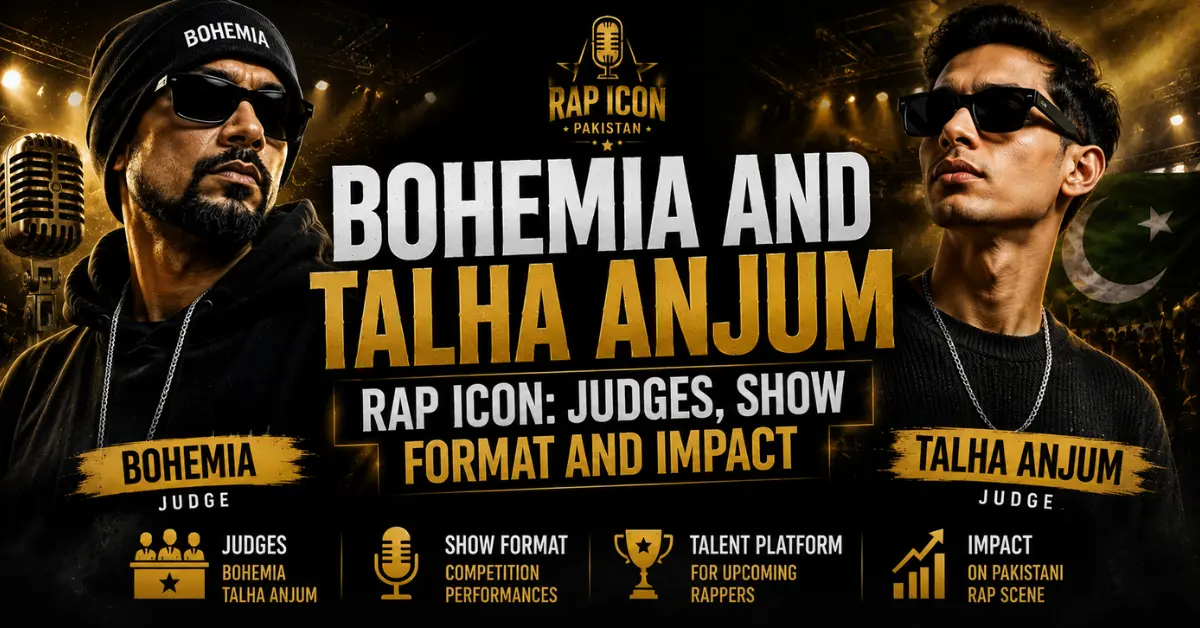
Bohemia and Talha Anjum Rap Icon is a search topic attracting attention from hip-hop listeners across Pakistan and India because both artists bring different generations and styles of South Asian rap to Rap Icon Pakistan. The two rappers serve as judges on the reality competition, where emerging performers compete through rap challenges, performances, battles, and elimination rounds.
Rap Icon Pakistan is positioned as Pakistan’s first original hip-hop reality show. It was created by Pixel Entertainment to give emerging artists a platform while introducing a rap-focused competition format to mainstream audiences.
For Indian viewers, the show is particularly interesting because it provides another perspective on the wider South Asian hip-hop movement. While India has developed highly visible rap competitions such as MTV Hustle, Rap Icon Pakistan places Pakistani rap culture, Urdu lyrics, regional identities, and local performance styles at the centre of its format.
This guide explains who Bohemia and Talha Anjum Rap Icon are, why they were selected as judges, what their roles mean for contestants, how the show works, and why Rap Icon Pakistan matters to the wider desi hip-hop audience.
Who Are Bohemia and Talha Anjum Rap Icon?
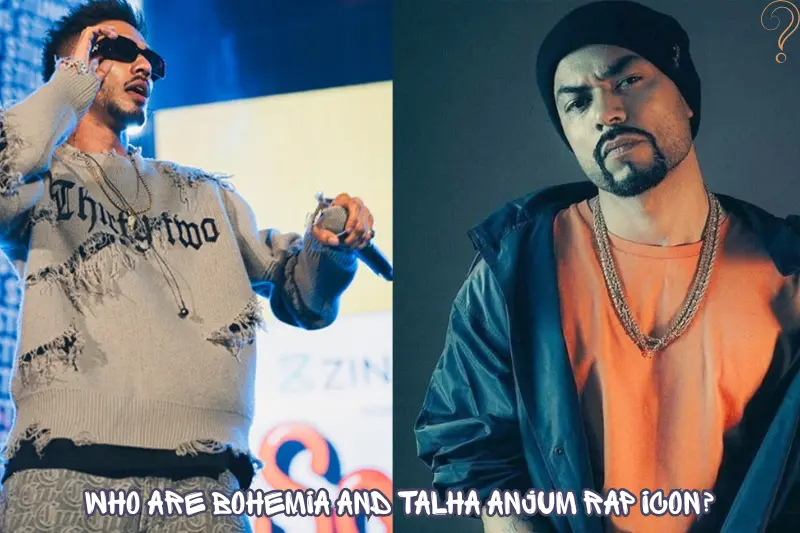
Bohemia and Talha Anjum Rap Icon are established names associated with different stages of South Asian hip-hop. Their presence together gives Rap Icon Pakistan a judging panel that connects an older influence on Punjabi rap with the contemporary Urdu hip-hop movement.
Bohemia: A Major Name in Desi Rap
Bohemia is a Pakistani-American rapper widely associated with the development and popularisation of Punjabi rap. His career has helped establish a distinctive identity for Punjabi hip-hop and has influenced how rap can be delivered in a South Asian language.
His role on Rap Icon Pakistan is important because contestants are not simply performing generic rap. They are working within a regional musical culture where language, storytelling, rhythm, pronunciation, attitude, and cultural references can all affect a performance.
For aspiring rappers, having an experienced artist such as Bohemia on the judging panel can add a strong connection to the earlier evolution of desi hip-hop.
Talha Anjum: A Voice of Contemporary Urdu Hip-Hop
Talha Anjum is a Pakistani rapper and songwriter known as one half of Young Stunners alongside Talhah Yunus. His music has played an important role in bringing contemporary Urdu rap to a wider audience. Apple Music describes Anjum as an artist who has helped elevate desi hip-hop through both Young Stunners and his solo work.
His judging role brings a more contemporary perspective to Rap Icon Pakistan. Modern rap competitions require more than fast delivery. Contestants need songwriting ability, memorable concepts, flow control, stage presence, and the ability to communicate an idea clearly.
Talha Anjum’s experience across group projects, solo music, collaborations, and live performances makes his perspective relevant to contestants trying to develop a complete artistic identity.
Why Are Bohemia and Talha Anjum Judges on Rap Icon Pakistan?
The simple answer is that the producers wanted recognised rap artists who could help identify the next generation of Pakistani rappers.
When Rap Icon Pakistan was announced, Pixel Entertainment CEO Rizwan Siddiqui explained that the concept was aimed at finding the “next Talha Anjum or next Bohemia.” The initial format was planned around roughly 10 episodes and 10 to 12 contestants competing in different rap challenges.
This makes the judging panel central to the show’s identity.
Bohemia and Talha Anjum Rap Icon represents an important chapter in the development of desi rap, while Talha Anjum represents the modern Urdu hip-hop wave. Together, they create an interesting contrast in musical experience and artistic approach.
What Is Rap Icon Pakistan?
Rap Icon Pakistan is a reality competition focused specifically on hip-hop and rap performance. Pixel Entertainment describes it as an original Pakistani hip-hop reality show created to nurture and showcase emerging talent.
The competition gives young performers an opportunity to demonstrate their skills in a structured television format.
How Does the Competition Work?
The basic concept involves contestants completing different rap-related challenges and performances. As the competition progresses, performers face elimination rounds, with stronger artists moving closer to the final stage.
The format can test several areas of rap ability, including:
- Lyric writing
- Flow and rhythm
- Delivery
- Freestyle ability
- Stage presence
- Performance confidence
- Thematic songwriting
- Ability to respond under pressure
- Originality and artistic identity
The show was announced with a planned group of around 10 to 12 contestants, while later coverage described the first season as featuring 12 emerging rappers competing across 10 episodes.
What Do the Judges Look For?
A strong rap performance is not simply about speaking quickly. A contestant needs to combine technical ability with personality and communication.
1. Lyrics and Wordplay
Good lyrics give a rapper something meaningful to communicate. Judges can assess whether a contestant has a clear message, interesting word choices, strong rhyme structures, and an identifiable writing style.
2. Flow and Timing
Flow describes how words and rhythms work together. A rapper may have excellent lyrics but still deliver a weak performance if the timing feels uncomfortable.
Contestants need to understand rhythm, pauses, emphasis, and changes in cadence.
3. Delivery
Delivery is the way a rapper communicates lyrics through voice, energy, emotion, and confidence.
Two performers can use similar words but produce completely different results because their deliveries are different.
4. Stage Presence
A television rap competition requires performers to engage an audience. Eye contact, movement, confidence, posture, and interaction with the performance space can all contribute to stage presence.
5. Originality
One of the biggest challenges for emerging rappers is developing an identity instead of copying established artists.
A contestant inspired by Bohemia and Talha Anjum Rap Icon can learn from their techniques, but successful artistry requires an individual voice.
Bohemia and Talha Anjum Rap Icon: Different Strengths, One Competition
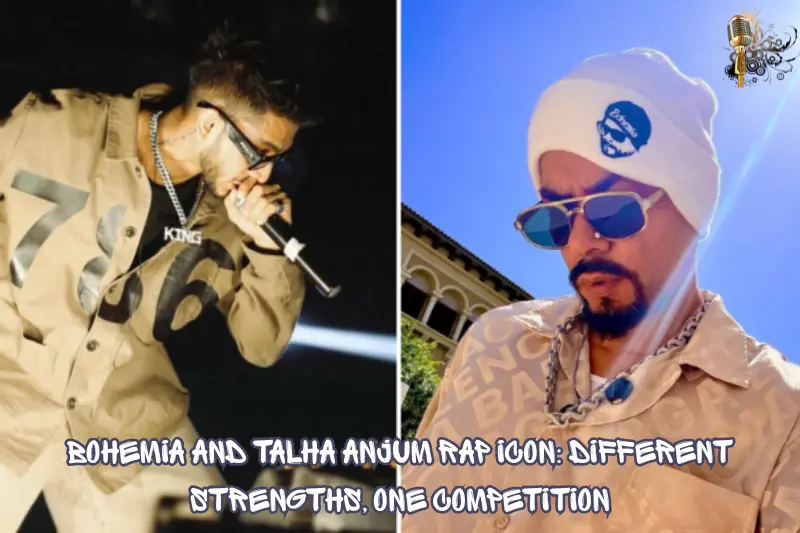
The appeal of the bohemia and talha anjum rap icon combination comes partly from the contrast between their backgrounds and artistic eras.
| Area | Bohemia | Talha Anjum |
|---|---|---|
| Musical association | Punjabi/desi rap | Contemporary Urdu hip-hop |
| Generational influence | Earlier phase of desi rap | Modern South Asian rap |
| Judging value | Experience and genre history | Contemporary songwriting and performance perspective |
| Audience connection | Long-term desi hip-hop listeners | Younger Urdu hip-hop audience |
| Role in show | Judge | Judge |
This contrast can benefit the competition because rap is not a single sound. South Asian hip-hop includes Punjabi, Urdu, Hindi, English, regional languages, underground styles, commercial sounds, conscious rap, battle rap, melodic rap, and experimental approaches.
A diverse judging perspective can therefore make the competition more interesting.
Why Is Rap Icon Pakistan Important for Indian Audiences?
Indian hip-hop fans may already be familiar with artists and competitions from India’s rapidly developing rap scene. However, Rap Icon Pakistan offers a different cultural and musical perspective.
The Indian and Pakistani hip-hop scenes share some linguistic and cultural connections, while also having their own regional histories and artistic identities.
A Wider South Asian Hip-Hop Picture
The growth of rap across South Asia shows how local languages can become powerful tools for hip-hop storytelling.
Indian rappers frequently work in Hindi, Punjabi, Marathi, Bengali, Tamil, Malayalam, and other languages. Pakistani rappers similarly use Urdu, Punjabi, Pashto, Sindhi, and English in different combinations.
This makes Rap Icon Pakistan relevant beyond Pakistan. Indian viewers can discover artists whose stories, production styles, and linguistic approaches may be different from what they normally hear.
What Makes Talha Anjum’s Judging Role Interesting?
Talha Anjum’s career connects underground-style Urdu hip-hop with a much broader contemporary audience. Young Stunners, his duo with Talhah Yunus, became an important part of Karachi’s hip-hop culture, while Anjum later developed a separate solo identity. Apple Music highlights both his Young Stunners work and solo career, including projects such as Open Letter.
For contestants, this background can provide useful lessons about artistic development.
An aspiring rapper does not necessarily need to remain limited to one sound. They can develop technical rap skills, experiment with production, collaborate with different artists, and gradually establish their own identity.
What Makes Bohemia’s Role Valuable?
Bohemia’s importance comes from his long association with Punjabi and desi rap. His presence gives the competition a link to an earlier period of South Asian hip-hop, when rappers were working to establish rap in local languages for wider audiences.
That perspective can be particularly valuable when evaluating contestants who use Punjabi or other regional influences.
A competition becomes more meaningful when it recognises both technical skill and cultural authenticity.
Rap Icon Pakistan and the Growth of Reality Rap Shows
Rap-focused reality competitions are not unique to Pakistan. Internationally, formats such as The Rap Game and Rhythm + Flow have demonstrated how rap can be adapted to television competition. India has also developed its own major rap-focused television format through MTV Hustle.
What makes Rap Icon Pakistan different is its local focus.
Instead of simply copying an international competition, the show places Pakistani rappers, languages, experiences, and hip-hop culture at the centre.
Pixel Entertainment identifies Rap Icon Pakistan as one of its original intellectual properties and describes the programme as a platform for emerging artists and Pakistan’s growing hip-hop scene.
Practical Lessons for Aspiring Rappers
Someone watching Rap Icon Pakistan can learn more than entertainment. The competition can also provide practical lessons for developing as a rapper.
Build Your Own Identity
Do not try to become another Bohemia and Talha Anjum Rap Icon. Study successful rappers, but use their work as inspiration rather than a template.
Your identity can come from:
- Personal experiences
- Local language
- Regional culture
- Unique storytelling
- Individual flow
- Distinctive voice
- Original production choices
Improve Lyrics Before Chasing Speed
Fast rapping can sound impressive, but speed alone does not create a memorable song.
Start with a clear idea. Build verses around that idea. Then improve rhyme patterns, rhythm, internal rhymes, and delivery.
Practise Performance
Record yourself performing the same verse several times.
Look for:
- Weak pronunciation.
- Unnecessary pauses.
- Uneven timing.
- Lack of vocal energy.
- Repetitive delivery.
- Poor breath control.
This type of practice can make a significant difference before performing publicly.
Listen Beyond Your Own Region
Indian listeners can explore Pakistani hip-hop, while Pakistani listeners can explore Indian rap. Studying artists from different regions can expose rappers to new flows, production techniques, storytelling methods, and linguistic approaches.
The goal is not imitation. The goal is musical growth.
Common Mistakes New Rappers Should Avoid
Copying Famous Artists
One of the most common mistakes is trying to sound exactly like a favourite rapper.
Influence is normal, but a competition judge can quickly notice when a performer lacks an original identity.
Focusing Only on Punchlines
Punchlines are useful, especially in battle rap, but an entire performance needs structure.
A strong song should have a clear beginning, development, memorable sections, and a satisfying conclusion.
Ignoring the Beat
Even strong lyrics can become ineffective when they do not fit the instrumental.
Rappers should practise writing according to tempo, rhythm, beat switches, and musical arrangement.
Forgetting the Audience
Rap is communication. A technically impressive verse that the audience cannot understand or connect with may lose some of its impact.
Clarity matters.
Where Can Viewers Follow Rap Icon Pakistan?
The programme has been released as a television and digital entertainment property, with episodes associated with Talha Anjum and Bohemia as judges. Current listings show the first season’s episodes beginning in June 2026 and continuing through July.
For the most reliable information about the programme, production details, and current projects, viewers should check Pixel Entertainment’s official project information.
Pixel Entertainment – Official Website
For more information about Bohemia and Talha Anjum Rap Icon, explore our related guides on Rap Icon Pakistan, Rap Icon Pakistan Host, Rap Icon Episode 1, Rap Icon Episode 4, and Rap Icon Pakistan Judges. These articles provide additional details about the show, host, episodes, judges, and emerging rap talent.
For official information about the production company and its projects, readers can visit Pixel Entertainment. This trusted source provides additional information about Rap Icon Pakistan and other entertainment projects.
Why the Show Matters Beyond Entertainment
The importance of Rap Icon Pakistan is not limited to television ratings or celebrity judges.
A structured platform can help introduce emerging artists to audiences who may never encounter underground rap through traditional music channels.
That matters because many aspiring musicians struggle with visibility. A rapper may have strong writing and performance skills but lack access to professional production, media exposure, or a large audience.
A nationally visible competition can potentially reduce that barrier by putting emerging talent in front of a much larger audience.
The first episode reportedly crossed 637,000 YouTube views within 12 days of its premiere, according to Dunya News, indicating substantial online interest in the programme.
Frequently Asked Questions
Who are the judges of Rap Icon Pakistan?
The main judging panel of Rap Icon Pakistan includes Pakistani rappers Bohemia and Talha Anjum Rap Icon. Both were confirmed as judges when the show was announced, and they evaluate emerging rappers competing through the programme’s challenges and performances.
What is Rap Icon Pakistan about?
Rap Icon Pakistan is a Pakistani reality competition focused on rap and hip-hop. Emerging rappers compete through performances, themed challenges, battles, and elimination rounds. The programme aims to discover new talent and give developing artists a larger platform within Pakistan’s growing hip-hop scene.
Why are Bohemia and Talha Anjum Rap Icon to the show?
Bohemia and Talha Anjum Rap Icon bring different experiences from South Asian hip-hop. Bohemia is strongly associated with Punjabi and desi rap, while Talha Anjum represents the modern Urdu hip-hop movement. Their contrasting backgrounds give contestants access to two different perspectives on rap performance and artistry.
Is Rap Icon Pakistan relevant for Indian hip-hop fans?
Yes. Indian listeners interested in desi hip-hop can use the show to discover Pakistani rappers, regional sounds, Urdu songwriting, and different approaches to rap performance. It also provides an opportunity to compare the development of Pakistani hip-hop with India’s established rap competition culture.
Where can viewers find official information about Rap Icon Pakistan?
Pixel Entertainment’s official website lists Rap Icon Pakistan among its original projects and describes the show as a platform for emerging Pakistani hip-hop talent. Viewers looking for production information should prioritise the producer’s official channels rather than relying only on social-media reposts or unofficial pages.
Conclusion
Bohemia and Talha Anjum Rap Icon represents an important combination for Rap Icon Pakistan. Bohemia brings a connection to the earlier development of desi and Punjabi rap, while Talha Anjum represents the contemporary Urdu hip-hop generation. Together, they give the show a judging panel that connects different eras and styles of South Asian rap.
For Indian hip-hop fans, the programme offers an opportunity to explore Pakistan’s emerging rap talent and understand how local language and culture shape modern hip-hop. For aspiring rappers, the bigger lesson is equally practical: strong lyrics, original identity, controlled flow, confident delivery, and authentic storytelling matter more than simply trying to imitate a famous artist.
The best next step for readers is to explore the latest Rap Icon Pakistan episodes and related artist coverage, then compare the contestants’ styles and performances with the wider Indian and Pakistani hip-hop scenes.
